From Zero to One
Peter Thiel is a multi-faceted character, some of which are highly questionable, such as the one who finances Palantir, whose military contracts are controversial, to say the least, or the one who has largely supported Donald Trump, to name a few.
Read More
Planning and time: factors for the success of digital transformation
As much as we might say it outright, the level of implementation of digital transformation within organizations is not satisfactory. The implementation of large group-startup programs, the development of mobile applications, massive recruitment of data scientists and AI specialists... we are most often witnessing the implementation of disorganized initiatives, and one may wonder whether the objective is not more to satisfy financial analysts than to carry out real in-depth work.
Read More
This is lean : Resolving the efficiency paradox
In the books that have anything to do with digital transformation, some necessarily deal with "lean", the principle prefigured by Kiishiro Toyoda, the son of the founder of Toyota. The principle was revolutionary when it was formulated in the 40s and 50s: it was opposed to the idea that productivity gains came from economies of scale made possible by the massification of production and the use of sophisticated technologies.
Read More
From Bitcoin to Burning Man and Beyond
From Bitcoin To Burning Man and Beyond deals with the organizational models of decentralized systems, starting with the blockchain.
It takes us into related notions such as identity in a digital society, governance, trust and social organization. Holacratic models of an organization without hierarchies are widely discussed and described.
Read More
Exponential Organizations
Why are some companies -including some startups- able to grow 10X faster than other organizations with 10X less staff? This is the question that Salim Ismael's book successfully answers. For 300 pages, he deconstructs the paradigms that govern this world whose principles of management and definition of value no longer have much to do with those of the 20th century.
Read More
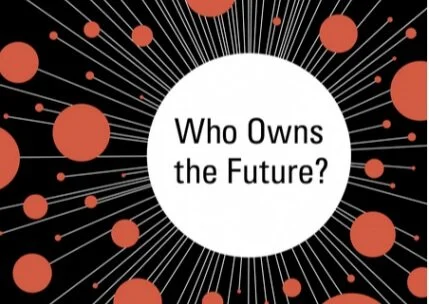
Who Owns the Future
Jaron admits it himself: he is not an economist, but rather an excellent connoisseur of the digital economy, having been in turn an expert in video games, an employee of the most emblematic companies of the Valley and now, for more than a decade, a consultant and writer appreciated by companies like Microsoft.
Read More
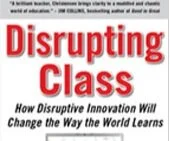
Disrupting class
I am regularly asked the question of the relationship between innovation and education. For many, the link is not necessarily obvious. It is through a few books, including Clayton Christensen's Disrupting Class, that it gradually became clear to me that it was not possible to envisage a society of innovation without profoundly reforming the school system, as we know it in France and other countries.
Read More
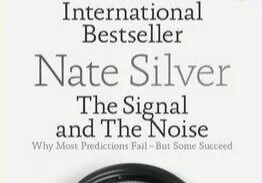
The Signal and the Noise
Obviously, we hear everywhere about the data revolution. For most of us, it is difficult to understand why it is possible to extract large amounts of intelligence from data. Nate Silver's book is extraordinary in that it illustrates with great simplicity how statistics can work miracles and help us better understand our world.
Read More
Crossing the chasm
This book is dedicated to the art of disruption in economics: what are the most remarkable characteristics of today's innovators, especially in the digital sector? It is mainly the ability to adopt disruptive thinking and to consider the value chain from unexpected and innovative angles. It is impossible to understand the digital revolution we are facing without opening this book.
Read More